Water Heater Repair in Jamaica Estates, Queens
Fast, reliable repair for gas water heaters, electric storage systems, and indirect boiler-fired tanks. We troubleshoot pilot failures, lukewarm water, leaking valves, and thermostat malfunctions.
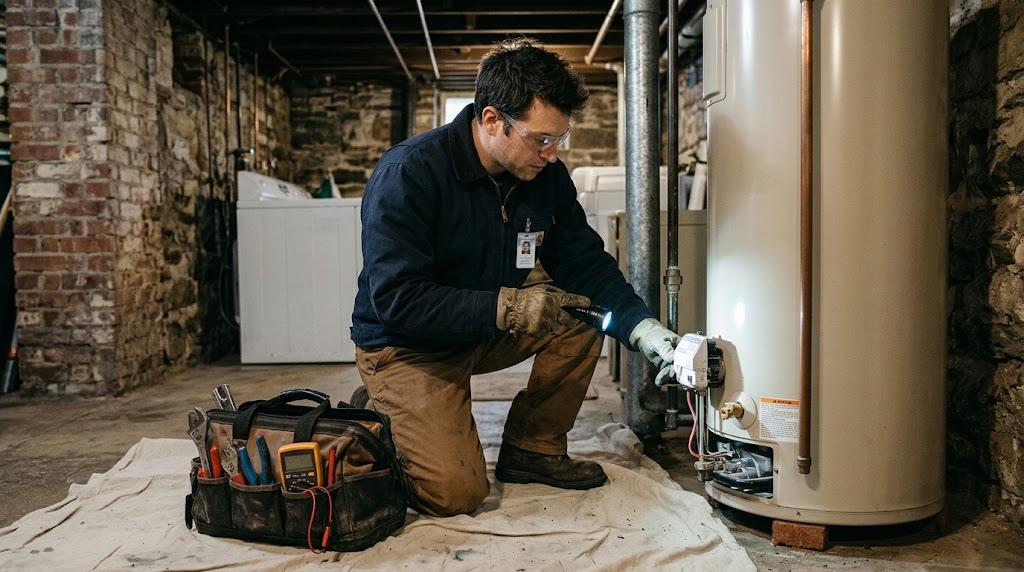
Diagnosing Common Water Heater Symptoms
A sudden loss of domestic hot water disrupts morning routines and household comfort. Whether you live in a classic Tudor along Midland Parkway or a brick split-level near Grand Central Parkway, our technicians arrive prepared to diagnose and repair all equipment types.
Contact us for water heater repair Jamaica Estates Queens when encountering:
- No Hot Water At All: The burner fails to ignite, the pilot light has blown out, or the electronic spark module has entered safety lockout.
- Inadequate or Lukewarm Water: Showers turn cold within minutes due to a broken internal dip tube or heavy sediment buildup insulating the tank bottom.
- Water Heater Leaking Jamaica Estates Queens: Puddles forming around the tank jacket, discharge from the temperature-and-pressure (T&P) valve, or corrosion around dielectric unions.
- Discolored or Rusty Hot Water: Decaying sacrificial anode rods allowing internal galvanic corrosion to tint household water.
- Popping or Rumbling Noises: Hard mineral scale boiling inside the tank chamber during active firing.
Gas vs. Electric vs. Indirect Boiler Systems
We provide certified service for:
- Gas Water Heater Repair Jamaica Estates Queens: Atmospheric draft hoods, power-vented units, thermocouple replacements, and gas control valves.
- Electric Water Heater Repair Jamaica Estates Queens: Upper and lower immersion heating elements, high-limit reset switches, and dual thermostats.
- Indirect Boiler Water Heaters: Highly efficient stainless steel storage tanks heated by circulating water from your central steam or hydronic boiler.
When Is Tank Replacement Necessary?
Knowing whether to repair or replace your water heater protects your basement from catastrophic flooding:
- Internal Tank Corrosion: When water weeps directly through the lower steel tank body, the glass lining has eroded. Tanks cannot be patched and must be replaced immediately.
- Age Exceeding 10–12 Years: Standard atmospheric storage tanks have an average lifespan of 8 to 12 years. If an older tank begins leaking, replacement is the responsible decision.
- Repairable Components: Leaking T&P relief valves, failed thermocouples, clogged burners, or faulty thermostats can be replaced economically without changing the entire tank.
What to Do If Your Tank Is Actively Leaking
If your water heater is actively discharging water onto the basement floor:
- Turn off the cold water supply valve located on the cold inlet pipe above the heater.
- Switch off the gas control knob to "OFF", or shut off the circuit breaker for an electric heater.
- Call our dispatch team at (315) 202-8009 for immediate replacement guidance.
Water Heater Troubleshooting FAQs
If water is leaking from the internal steel storage tank seam or base, the glass lining has failed, and the unit must be replaced immediately to prevent basement flooding. However, if the leak originates from an external fitting, temperature and pressure (T&P) relief valve, or drain spigot, it can usually be repaired quickly.
Rumbling noises are caused by heavy mineral scale and sediment accumulation sitting on the tank floor. Trapped water boils underneath this sediment layer, creating steam bubbles that violently pop as they escape into the upper tank.
Common in Jamaica Estates homes, an indirect water heater uses hot water generated by the central heating boiler circulated through an internal stainless steel coil inside a well-insulated domestic storage tank. It delivers exceptional recovery rates without requiring a separate gas flue.
In gas water heaters, severe sediment buildup can reduce heating efficiency. In electric water heaters, a burned-out lower heating element or a cracked internal dip tube (which causes incoming cold water to short-circuit directly to the hot outlet) is typically the root cause.